
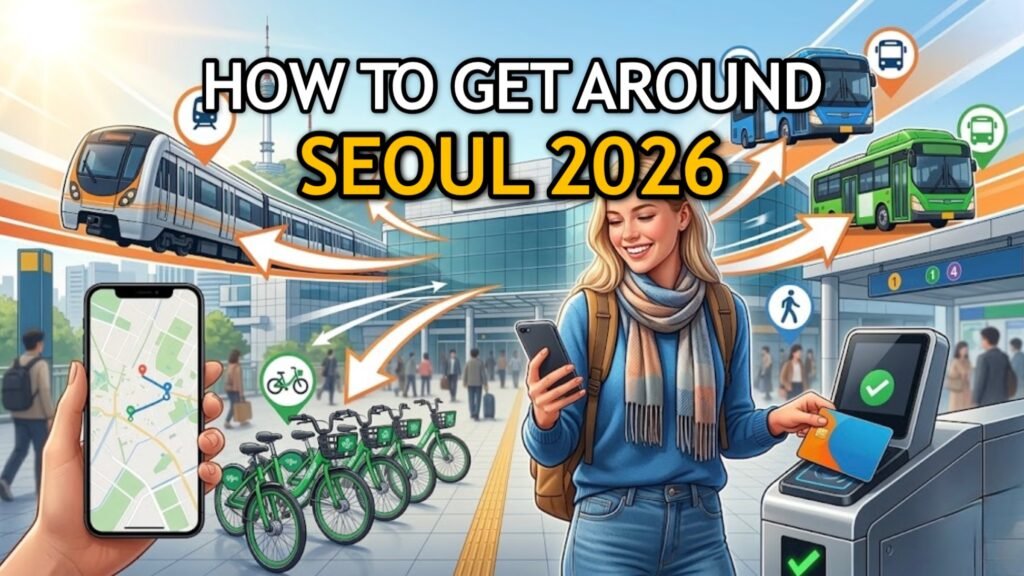
Hi guys! It’s your local Korean friend, Yeda. 🇰🇷
You’ve booked your flight, packed your bags, and downloaded all the essential Korea apps from my last post.
Now you are probably wondering: how to get around Seoul without getting totally lost?
South Korea has one of the cleanest, safest, and most efficient public transportation systems in the world.
But with so many subway lines, colorful buses, and even public bikes and e-scooters, it can feel a little overwhelming at first.
Don’t worry—I’ve got you.
From the moment you land at Incheon Airport to riding a bike along the Han River, here is your updated, easy-to-follow guide on how to get around Seoul in 2026. Let’s dive in!
1. How to get around Seoul from Incheon Airport
Incheon Airport is about 45–60 minutes away from central Seoul, and most travelers choose one of these three options to reach their hotel.
How to get around Seoul Option A: AREX (Airport Railroad Express)
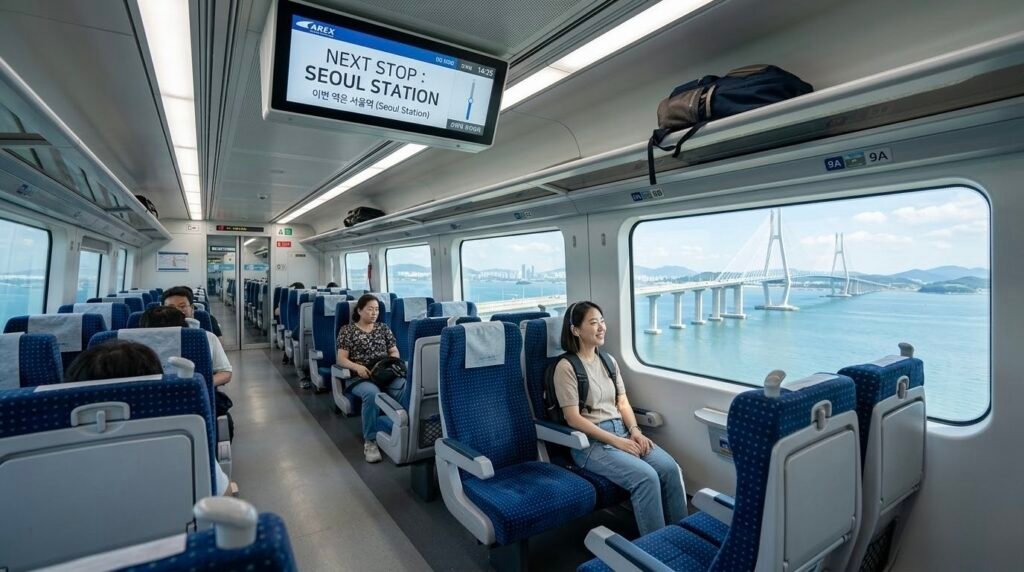
This is the most popular and beginner‑friendly way to get into the city because it connects directly to Seoul Station.
- Express Train:
Non‑stop from Terminal 1/2 to Seoul Station in about 43 minutes.
You get an assigned, comfortable seat and free Wi‑Fi. (Price: around 9,500 KRW / $7.00 USD on one way) - All‑Stop Train:
Works like a regular subway, stopping at major stations such as Hongik Univ. (Hongdae).
The ride takes about 55–60 minutes. It is cheaper, but you might need to stand during busy hours. (Price: around 4,500 KRW / $3.30 USD)
How to get around Seoul Option B: Airport Limousine Bus
If you have big suitcases or don’t want to deal with transfers, choose the bus.
Taking luggage through stairs and crowds in the subway can be tiring, especially after a long flight.
- Large, comfortable seats with plenty of legroom
- Direct routes to major areas like Myeongdong, Dongdaemun, Hongdae, and Gangnam
- Many routes stop right in front of big hotels or very close to them
- Price: 10,000–17,000 KRW / $7.50–$12.50 USD depending on the route and destination
How to get around Seoul Option C: International Taxi
Traveling with family or a group of friends? A taxi can actually be very convenient and cost‑effective when you split the fare.
- Look for the official “International Taxi” desk at the airport
- Drivers can communicate in basic English, Japanese, or Chinese (varies by driver)
- Price: around 50,000–70,000 KRW / $37–$52 USD to central Seoul.
Fares are standardized by zone, so you don’t need to worry about being overcharged
2. The 2026 Game Changer: Seoul Climate Card
If you are figuring out how to get around Seoul on a budget, you should seriously consider the Climate Card.
For many visitors, it is a total game‑changer.
This card is an unlimited transit pass within Seoul that covers:
- Seoul subway lines inside the Seoul city boundary
- Seoul city buses (blue, green, and most village buses)
- In 2026, some tourist‑type passes are bundled with free or discounted public bike use (I’ll explain this in the bike section).
What’s New in 2026
Until recently, tourists often needed cash or a separate transit card to ride everything.
Starting in 2026, more machines in major Seoul subway stations accept international credit cards (Visa, Mastercard, etc.) for buying and recharging short‑term Climate Card passes aimed at travelers.
Availability can still differ by station, so don’t be surprised if a few machines only accept Korean cards or cash.
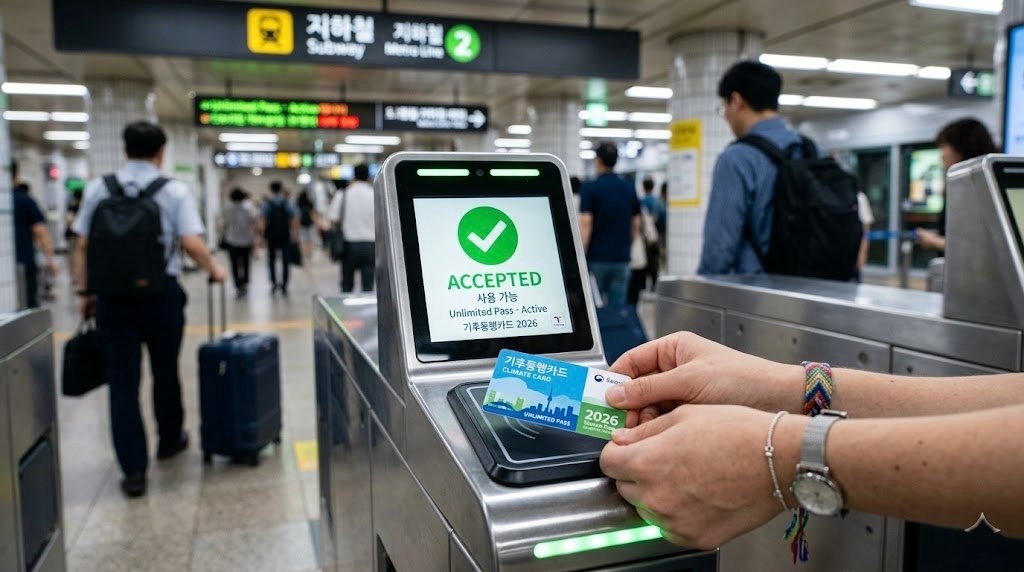
Typical Short‑Term Pass Prices (Tourist‑Type Climate Card)
These are common price points for short‑term unlimited passes:
- 1‑Day Pass: 5,000 KRW (Approx. $3.70 USD)
- 3‑Day Pass: 10,000 KRW (Approx. $7.40 USD)
- 5‑Day Pass: 15,000 KRW (Approx. $11.00 USD)
- 7‑Day Pass: 20,000 KRW (Approx. $14.80 USD)
A single subway or bus ride in Seoul typically costs around 1,400–1,550 KRW(Approx. $1.10 USD) with a card, depending on distance.
So if you ride the subway and buses about four times a day, the pass usually pays for itself and saves you the trouble of constantly topping up.
Important: Climate Card coverage is focused on Seoul city.
If you go beyond the Seoul boundary, additional fares or a separate card may be required.
3. The Classic Backup: T‑Money Card
You might ask, “Yeda, if I have the Climate Card, do I still need a T‑Money card?”
My short answer: Yes, you should still get one if you plan to leave central Seoul or take regional trips.
T‑Money is Korea’s standard rechargeable transportation card that works all over the country.
You can:
- Buy it at most convenience stores (CU, GS25, 7‑Eleven, etc.) or at some subway stations
- Use it on subways, city buses, some intercity buses, and most taxis nationwide
- Pay for small purchases at many convenience stores
Think of the Climate Card as your unlimited pass inside Seoul, and T‑Money as your universal backup for everywhere else.
If you plan day trips to places like Suwon, Incheon city, or further destinations like Busan (using KTX or local transit there), T‑Money will be very handy.
Purchase Price: Usually 3,000–5,000 KRW ($2.20–$3.70 USD) for the card itself, then you top it up with as much as you need.
4. Mastering Seoul’s Subways and Buses
Mastering the subway system is the easiest way to learn how to get around Seoul.
Seoul Subway System
Seoul’s subway network is huge but very foreigner‑friendly:
- Each line has a color and number (Line 1 – dark blue, Line 2 – green, Line 3 – orange, etc.)
- Station names and announcements are typically available in Korean, English, and often Chinese and Japanese
- Trains and platforms are generally clean, safe, and air‑conditioned in summer; many cars have heated floors or seats in winter
- Transfers between lines are well‑marked, and major tourist spots usually have clear English signage
Decoding Seoul’s Colorful Buses
Seoul’s buses use colors to show their role and general route type:
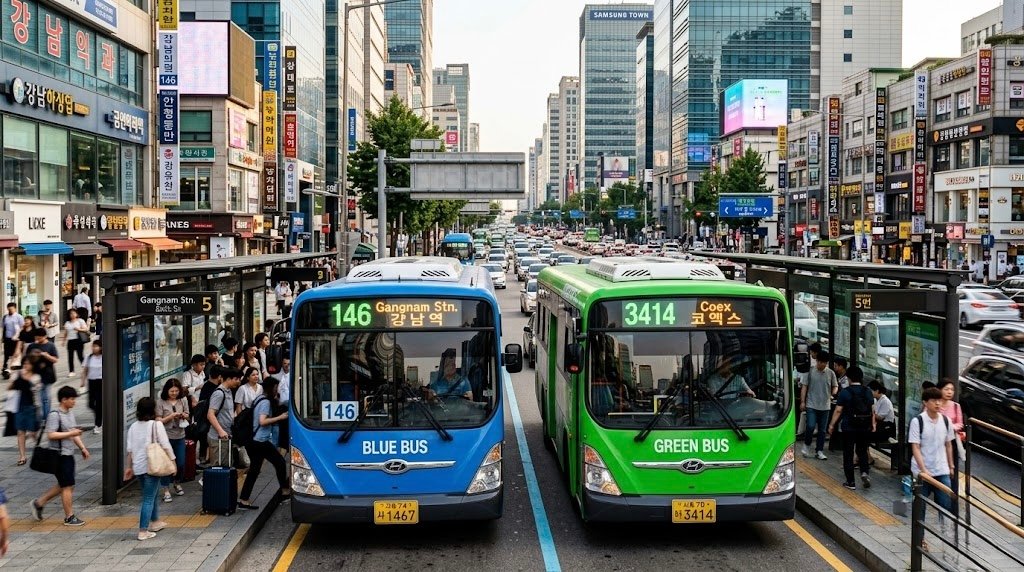
- Blue buses: Mainline routes that travel longer distances across the city, connecting major districts
- Green buses: Local routes that connect residential neighborhoods to subway stations and blue‑bus corridors
- Red buses: Express buses that connect Seoul with nearby cities and suburbs in the metropolitan area
- Night buses (N‑buses): Mostly dark‑colored buses with an “N” in the route number, running late at night (roughly around midnight to early morning) when subways are closed
🚨 Yeda’s Golden Rule:
When riding buses and subways in Korea, you usually must tap your card when you get on AND when you get off.
- On the subway: tap in at the gate and tap out when you exit
- On the bus: tap when boarding and again at the exit door
If you forget to tap off on the bus, the system may charge a higher fare or treat it as an incomplete trip, which can affect your next ride.
5. How to get around Seoul by Seoul Public Bike
As a local who loves cycling, this is my favorite part!
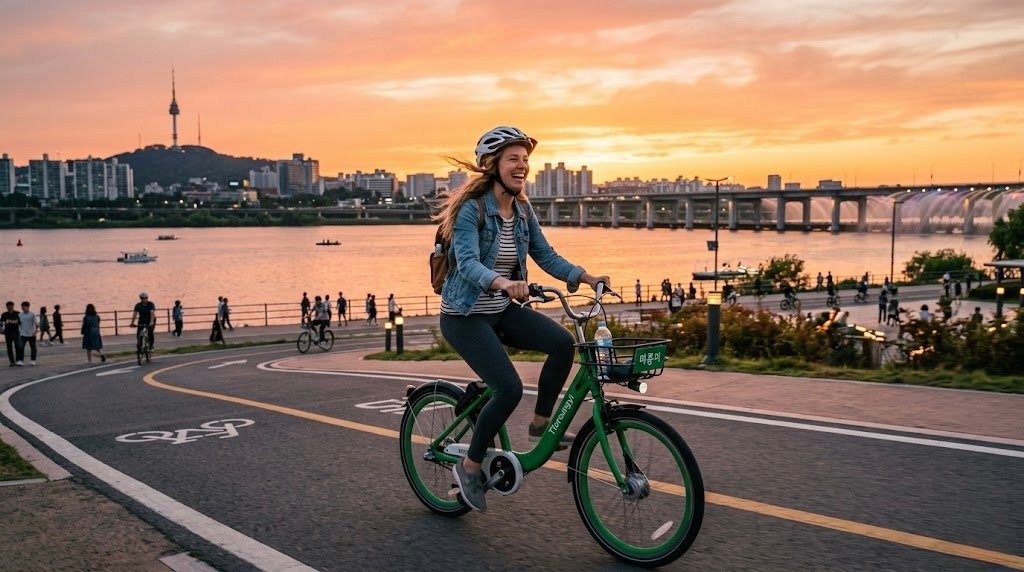
You’ll see many green‑and‑white bicycles parked at docking stations all over the city—these are Ttareungyi, Seoul’s official public bike system.
Riding a Seoul Public bike along the Han River around sunset is one of the best free (or very cheap) experiences in Seoul.
The riverside bike paths are mostly flat, separated from car traffic, and great for beginners.
How to Use Ttareungyi
You have two main ways to use them:
- Official Ttareungyi app:
Download the app, sign up, add a payment method, then scan the QR code or enter the bike number to unlock it. - Climate Card + bike pass:
Some Climate Card tourist passes in 2026 include unlimited 2‑hour bike rentals or discounted use.
In that case, you typically link your card in the app or at a kiosk, then unlock the bike using the QR code or card according to the instructions at the station.
Details can vary by pass type, so always check the English information on the machine or website.
When you are done, return the bike to any official docking station and make sure you hear or see the lock confirmation before walking away.
6. Micro‑Mobility: Electric Scooters and E‑Bikes
If you want to move a bit faster without too much effort, you’ll notice plenty of shared electric kick‑scooters and e‑bikesparked along sidewalks in busy areas.
Popular brands change over time, but you’ll commonly see several different logos.
How to Ride
- Download the app for the specific brand
- Register your phone number and payment method (many accept foreign cards, but not all)
- Scan the QR code on the scooter or bike to unlock it, then follow the in‑app instructions
Important Local Laws & Etiquette
- Riding electric scooters on pedestrian sidewalks is prohibited. Use bike lanes where available or ride on the right side of the road.
- Helmets are legally required when using e‑scooters. Police checks are not constant, but you are still responsible for following the law.
- Park neatly when you finish—do not block building entrances, bus stops, or narrow sidewalks. Some apps charge a penalty for illegal parking.
7. A Quick Navigation Reminder
I mentioned this in my previous post, but it’s so important that I’ll repeat it: Do not rely on Google Maps for navigation in Korea.
- Google Maps has limited walking directions and real‑time transit information in Korea
- Instead, use Naver Map or KakaoMap (both have English interfaces)
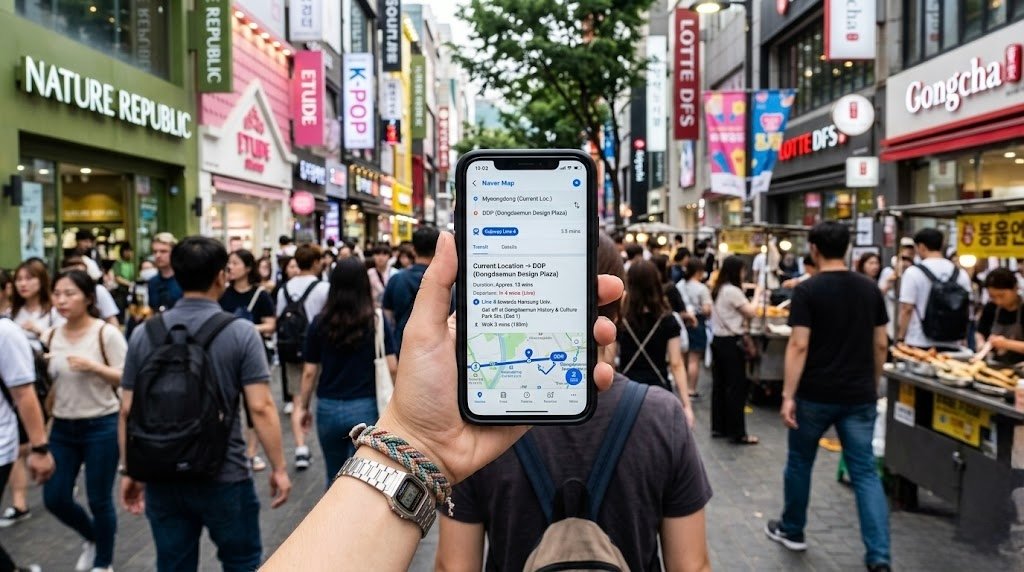
These local apps will:
- Show accurate subway, bus, and walking directions
- Tell you which subway car to board for the fastest transfer
- Provide live bus arrival times and updated exit information
If you only download one thing before your trip, make it a Korean map app!
8. Need a Visual Guide? Visit “Korea with Yeda”
Reading is helpful, but watching someone actually do it is even better.
If you still feel nervous about navigating Incheon Airport, buying tickets, or using Ttareungyi, come over to my YouTube channel, Korea with Yeda.
There, I share step‑by‑step vlogs that show:
- How to find the AREX and airport buses at ICN
- Exactly how to use the ticket machines and recharge cards
- How to safely unlock, ride, and return public bikes in Seoul
Subscribe, and let’s explore Seoul together in real time!
Final Thoughts from Yeda
Learning how to get around Seoul can feel intimidating at first, but Seoul’s transportation system is designed to be logical, clean, and fast.
Within your first 24 hours, you’ll be tapping your card, transferring between lines, and even hopping on a public bike like a local.
I hope this guide makes your Seoul adventure much smoother! If you want more local tips and want to see my daily life in Korea, come say hi on my YouTube channel, Korea with Yeda.
Let’s explore Korea together! 💛